
- Your cart is empty
- Continue Shopping
How to Roll a Joint: A Complete Beginner’s Guide With a Filter Tip
- Posted on
-
Posted by: Blaze Jax
- 0 comments
- Categories: How-To Guides

Affiliate Disclosure: This post contains affiliate links. If you buy through our links we may earn a small commission at no extra cost to you.
Quick Answer
Grind your material, make a filter tip, fill the paper evenly along its crease, then roll it between your fingers to shape and tuck the edge. Lick the gum, seal, and pack the open end. Most beginners fail by overfilling or rolling too tightly — keep the fill light and even.
Rolling by hand is a skill that takes a few tries to click, and then never leaves you. Once your fingers learn the motion, a well-shaped roll takes under a minute. This guide breaks the process into simple steps, with a filter tip included for structure, and flags the mistakes that ruin most first attempts.
What You’ll Need
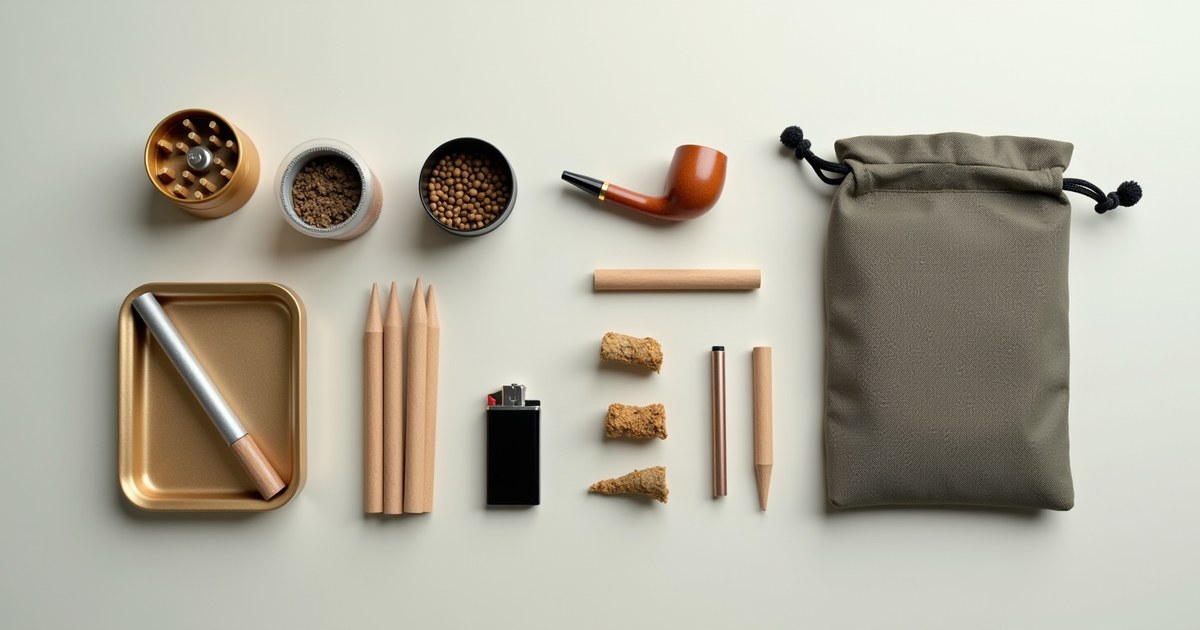
- Rolling papers (1¼ size is easiest to start with)
- A grinder
- A filter tip or thin piece of card
- A rolling tray to catch spills
A tray keeps everything in one place and stops material from ending up on the floor. Our best rolling tray for beginners guide covers what to look for.
“Roll That Shit” Rolling Tray at The Smokery Hub →
Step 1: Prepare the Material
Grind your material to a consistent, medium texture. Too coarse and it won’t pack evenly; too fine and it will burn too fast and can fall through. A good grinder makes this step effortless — see our complete grinder guide if you’re choosing one.
Step 2: Make a Filter Tip
- Take a small strip of thin card, about the width of your finger.
- Fold it back and forth a few times in a zigzag pattern.
- Roll it tightly into a small cylinder, with a slight curl at the end.
- Hold it against the short edge of the paper, at one end of the crease.
Pre-cut tips are convenient if you’d rather skip this step. Our guide on whether you need filter tips explains the trade-offs.
Step 3: Fill the Paper
Hold the paper with the gum strip facing you and along the top edge. Place the filter tip at one end. Spread the ground material evenly along the crease, slightly thicker at the tip end and thinner at the open end so the roll tapers naturally. Don’t overfill — a thin, even line burns better than a heavy lump.
Step 4: Shape the Roll
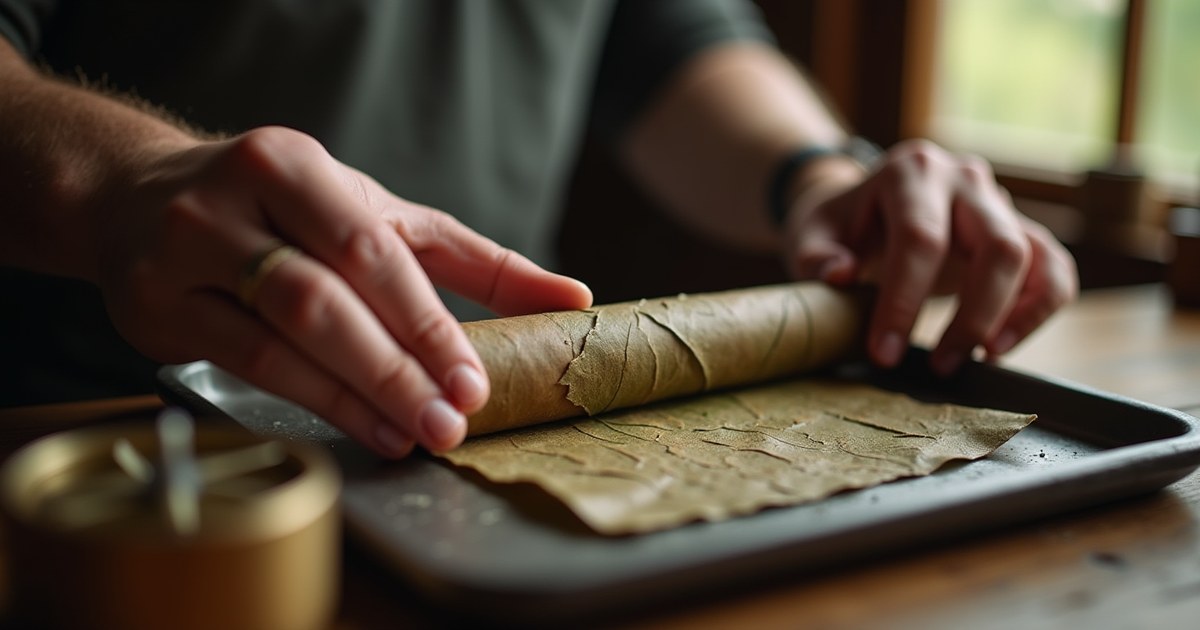
Pinch the paper between your thumbs and forefingers and roll it back and forth gently, letting the material settle into a cylinder shape. Keep the filter tip in position as you work. The goal is a compact, even shape — not tight, but firm.
Step 5: Tuck and Roll
Tuck the non-gum edge of the paper around the material and behind the filter, then start rolling upward with your thumbs. Roll slowly toward the gum strip, keeping tension even along the length. Take your time here; this is the step where most rolls go wrong.
Step 6: Seal and Finish
- Lick the gum strip lightly along its length.
- Roll the paper closed and press the seam to seal.
- Pack the open end gently with a pen tip or small stick.
- Twist the end to close it.
If it comes out uneven or wrinkled, that’s normal. Everyone’s early rolls look rough; your hands learn quickly.
Common Mistakes
| Mistake | Result | Fix |
|---|---|---|
| Overfilling | Canoeing, uneven burn | Use a thin, even line |
| Rolling too tight | Hard to draw, burns slowly | Keep it firm but not squeezed |
| Rolling too loose | Burns fast, falls apart | Use more even fill and tension |
| Too much moisture on the gum | Soggy, tears | Lick lightly |
| No filter tip | Loose material, floppy shape | Add a tip or crutch |
If You’d Rather Use a Machine
Hand-rolling isn’t for everyone. A rolling machine gives a consistent result almost instantly. See our guide to using a rolling machine, or for the by-hand approach with more detail, read how to roll without a machine. For cone shapes, we have a separate guide to rolling a perfect cone.
Rolling Machine 110mm at The Smokery Hub →
Related Articles
Frequently Asked Questions
Why does my roll keep canoeing?
Usually from uneven filling or a roll that’s too tight on one side. Spread the material evenly along the whole crease.
How long does it take to learn?
Most people get a usable roll within a handful of attempts and become quick after a couple of weeks of practice.
Is a filter tip necessary?
No, but it helps the roll keep shape and prevents loose material from reaching your mouth.
What size paper is best for a first attempt?
A 1¼ size paper. It’s large enough to handle easily but not unwieldy.
Final Thoughts
Rolling is about feel, not force. Keep the fill light and even, take your time on the tuck, and expect a few rough rolls at the start. By your tenth attempt it should feel natural.
Start Rolling at The Smokery Hub
Papers, trays, machines, and filter tips for every skill level.
Prices listed are approximate and may vary by retailer. Always check current pricing before purchasing.
how to roll a joint, how to roll a joint for beginners, how to roll a joint with a filter, joint rolling tutorial