
- Your cart is empty
- Continue Shopping
How to Clean a Metal Herb Grinder the Right Way
- Posted on
-
Posted by: Blaze Jax
- 0 comments
- Categories: Herb Grinders
Affiliate Disclosure: This post may contain affiliate links. We may earn a small commission if you purchase through our links, at no extra cost to you.
Quick Answer
To clean a metal herb grinder, disassemble all pieces, soak them in isopropyl alcohol (91%+) for 20–30 minutes, scrub with a soft brush, rinse with warm water, and dry completely before reassembling. Never reassemble a damp grinder — moisture causes threads to seize.
A dirty grinder is a slow grinder. Resin and plant material build up in the teeth and threading over time, making it harder to turn and reducing grind quality. A clean grinder spins smoothly, grinds more evenly, and is genuinely more pleasant to use. The good news: cleaning a metal grinder takes about 40 minutes and costs almost nothing.
What You Need
- Isopropyl alcohol (91% or higher) — 70% works but 91%+ dissolves resin faster
- A soft-bristle brush — an old toothbrush or a purpose-made grinder brush
- Cotton swabs (Q-tips) — for getting into the threading
- A freezer (optional, but helpful — see Step 1)
- A clean plate or tray — to place the pieces on
- Paper towels or a lint-free cloth
- Warm water — for rinsing after the alcohol soak
Step-by-Step Cleaning Guide
Step 1: Freeze Your Grinder First (Optional but Recommended)
Place the assembled grinder in the freezer for 20–30 minutes before disassembling. Cold causes sticky plant material to contract and become brittle, making it much easier to brush out of the teeth and screen. This step is especially useful if your grinder is heavily caked with residue.
Step 2: Disassemble All Pieces
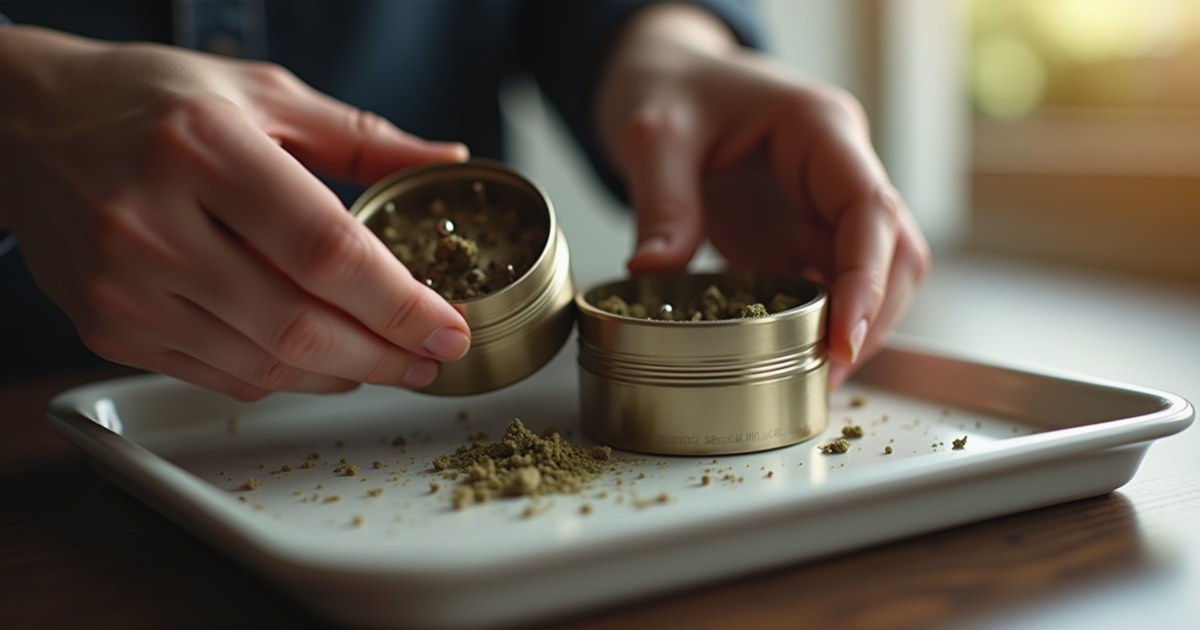
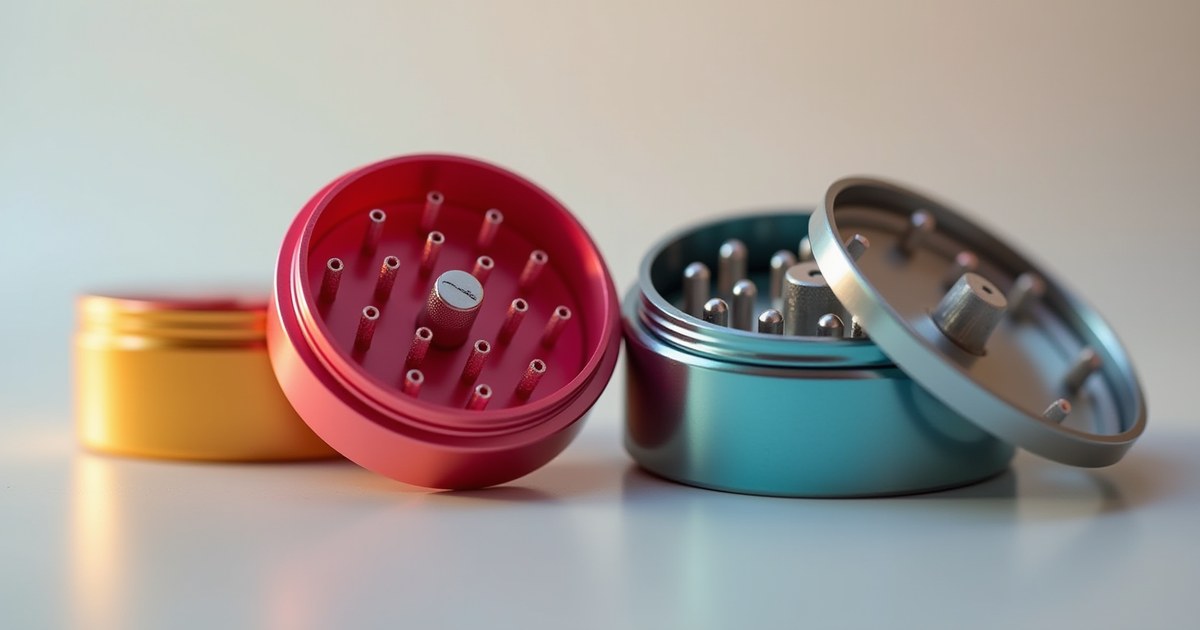
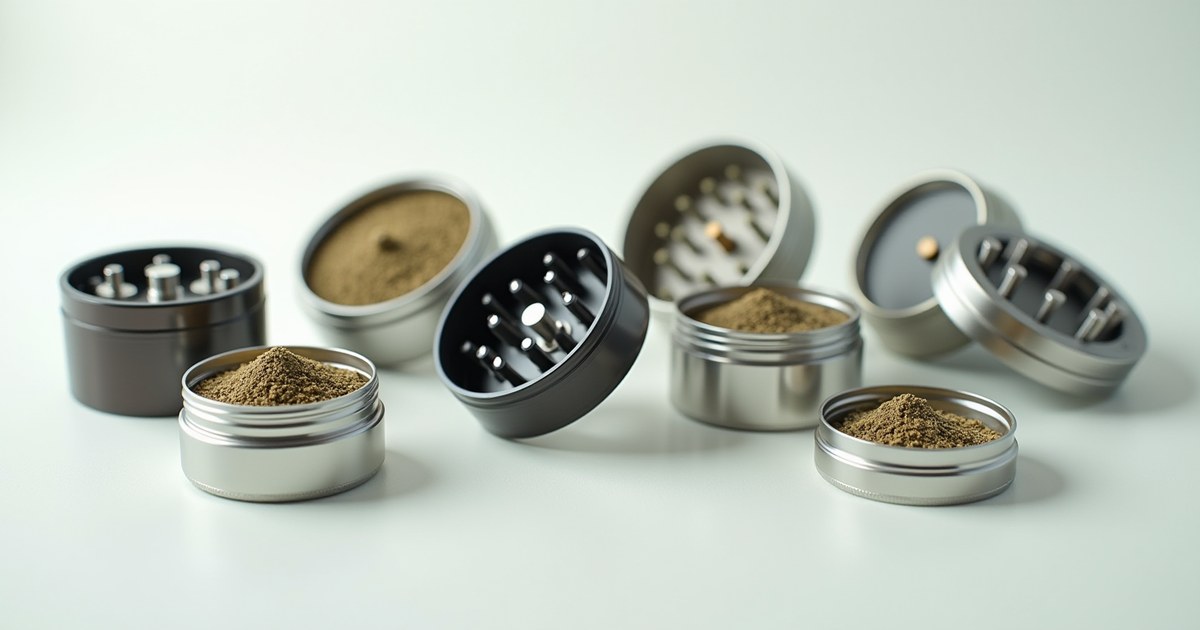
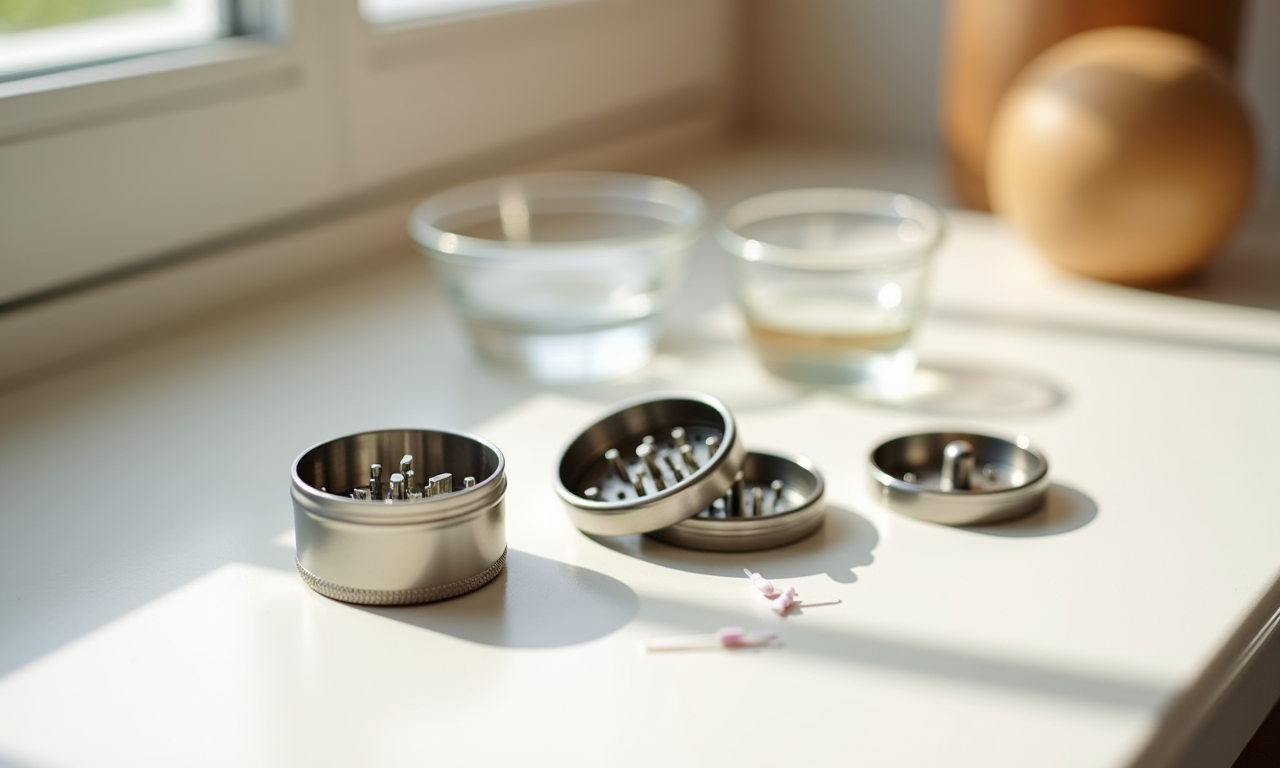
Unscrew the grinder into its individual components: the lid, both grinder halves (teeth), the collection chamber, and the kief catcher. Hold each piece over a clean plate while separating them. Save any loose kief from the bottom chamber before cleaning — this is usable material you don’t want to wash away.
Step 3: Dry-Brush All Pieces
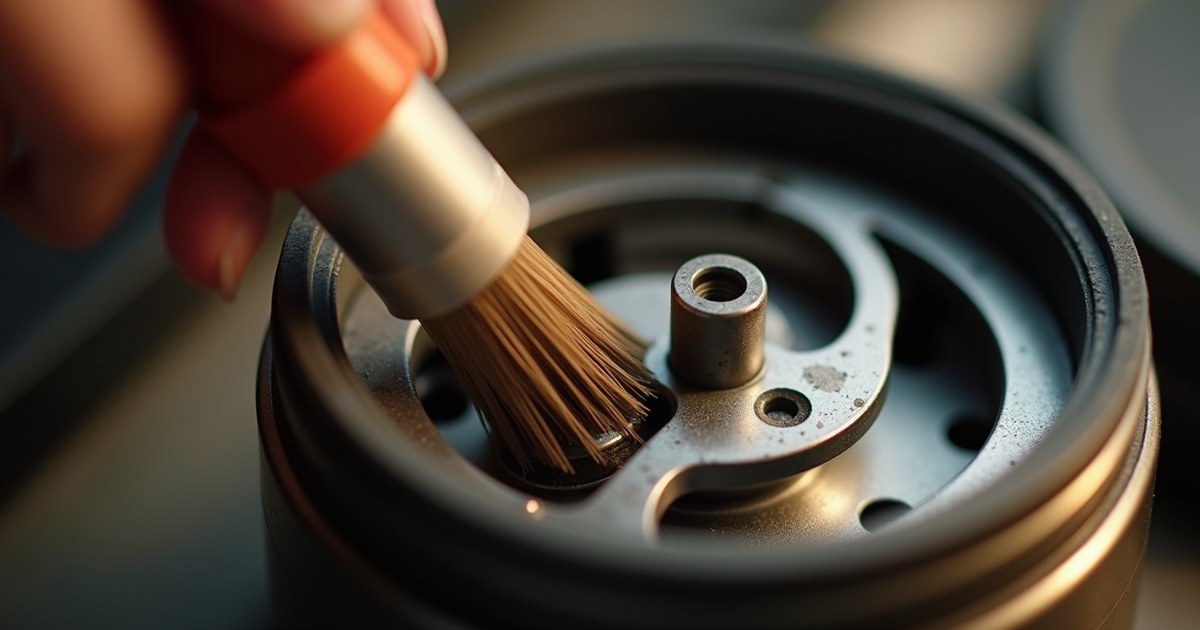
Use a dry soft-bristle brush to brush out all loose material from the teeth, the holes in the mesh screen, and the threading on all pieces. Brush over a plate so you can collect any remaining usable material. This dry-brush step removes most of the bulk before soaking.
Step 4: Soak in Isopropyl Alcohol
Place all metal pieces into a zip-lock bag or small container. Pour enough isopropyl alcohol to fully submerge the pieces. Seal and let soak for 20–30 minutes. For heavily caked grinders, soak for 30–45 minutes and add a pinch of coarse salt as a mild abrasive.
Important: Do not soak acrylic windows or plastic parts in alcohol — it will cloud or crack them. Clean those pieces with warm soapy water only.
Step 5: Scrub the Remaining Residue
After soaking, remove the pieces and scrub each one with your brush while still wet with alcohol. Focus on the teeth, the mesh screen (brush gently), the threading grooves, and the interior walls of all chambers. Use cotton swabs dipped in alcohol for tight corners.
Step 6: Rinse Thoroughly
Rinse all pieces under warm running water to remove all alcohol residue. Run water through the mesh screen from both sides to clear it completely. Rinse thoroughly — you don’t want any alcohol flavour remaining.
Step 7: Dry Completely Before Reassembling
Lay all pieces on clean paper towels and leave to air-dry for at least 1–2 hours. Alternatively, pat dry with a lint-free cloth and leave for 30 minutes. Never reassemble a damp grinder. Moisture trapped between the threaded sections causes them to seize, making the grinder extremely difficult to open.
How Often Should You Clean Your Grinder?
| Usage Level | Cleaning Frequency |
|---|---|
| Light use (1–2 sessions/week) | Every 4–6 weeks |
| Moderate use (3–5 sessions/week) | Every 2–3 weeks |
| Heavy daily use | Every 1–2 weeks |
| Kief catcher screen only | Monthly — or when screen clogs |
Quick Tips to Keep Your Grinder Cleaner for Longer
- Tap it before closing. After grinding, lightly tap the grinder on a hard surface. This knocks excess material down into the collection chamber rather than leaving it on the teeth.
- Don’t over-pack the chamber. Overfilling compacts material into the teeth, speeding up residue build-up.
- Collect kief regularly. Letting kief accumulate for months can clog the mesh screen faster.
Related Articles
Frequently Asked Questions
Can I use rubbing alcohol to clean my grinder?
Yes — isopropyl alcohol (rubbing alcohol) at 91% or higher is the best cleaning agent for metal grinders. Avoid 70% if possible, as it contains more water which requires longer drying time.
How do I clean the mesh screen without damaging it?
Soak it in alcohol first to loosen the resin, then brush gently with a soft toothbrush. Use cotton swabs for the edges. Never use metal objects to poke through the holes — this warps the mesh.
My grinder threads are seized after cleaning — what happened?
The pieces were likely reassembled while still slightly damp. Leave them to dry fully (at least 2 hours) and try again. A very light application of food-grade coconut oil on the threads can help loosen seized grinders.
Can I put my metal grinder in the dishwasher?
Not recommended. Dishwasher heat and detergent can strip anodised coatings, dull the finish, and cause threads to warp over time. The isopropyl alcohol method is safer and more effective.
Final Thoughts
Cleaning your metal grinder is one of the simplest maintenance habits you can build. Twenty minutes every few weeks keeps it spinning like new, extends its lifespan significantly, and gives you a noticeably better grind every time. If your grinder is sticky and hard to turn, it’s time for either a deep clean or an upgrade.
Ready to upgrade? The Zilla Alloy 50mm 4-Part Grinder and 4-Part Aluminum Grinder 63mm are both in stock at The Smokery Hub.
Time for a New Grinder?
Browse our full range of herb grinders — from budget aluminum to premium 4-piece options with kief catchers.
clean grinder with isopropyl alcohol, grinder cleaning guide, grinder maintenance tips, how to clean a metal herb grinder