
- Your cart is empty
- Continue Shopping
Acrylic vs Metal Herb Grinder — Which One Lasts Longer?
- Posted on
-
Posted by: Blaze Jax
- 0 comments
- Categories: Herb Grinders
Affiliate Disclosure: This post contains affiliate links. If you buy through our links we may earn a small commission at no extra cost to you.
Quick Answer
Metal grinders win on durability and grind quality — sharper teeth, no cracking, and they last for years. Acrylic grinders win on price and visibility, since the clear body lets you see fill level at a glance. For long-term daily use, metal is worth the extra few dollars; for a cheap backup or a first-time buy, acrylic is a genuinely reasonable choice.
Grinders are mostly made from one of two materials: acrylic (a clear hard plastic) or metal (usually aluminum or zinc alloy). The material affects how long the grinder lasts, how well it grinds, how much it weighs, and how much it costs. This comparison breaks down each factor honestly so you can decide which is right for you.
What Is an Acrylic Grinder?
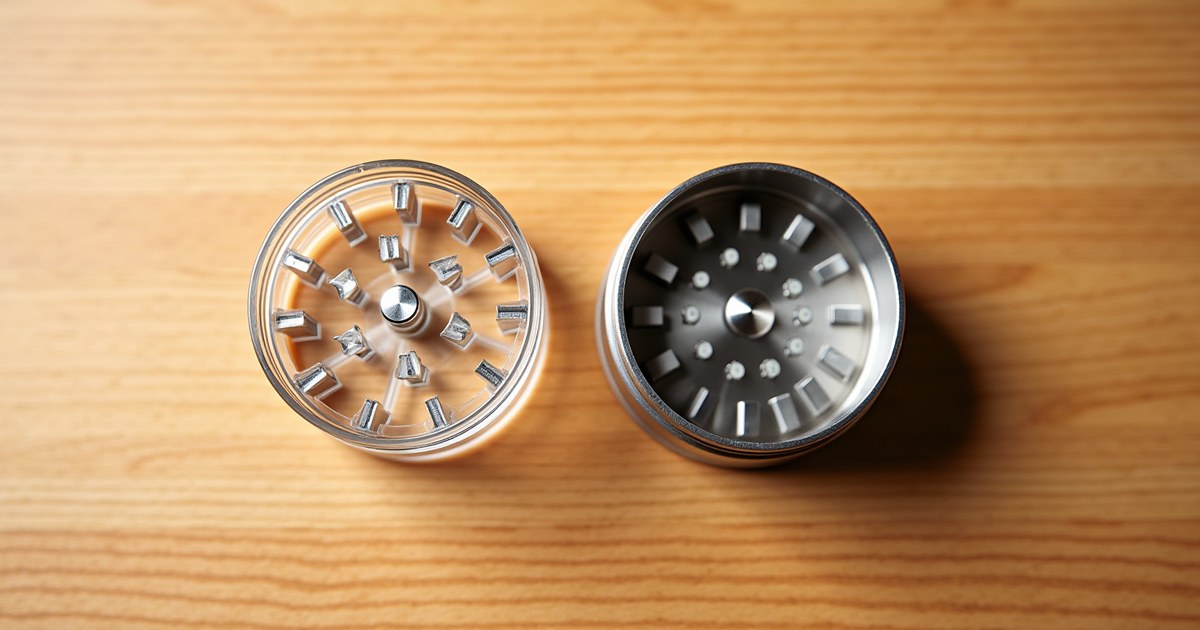
Acrylic grinders are made from a clear, hard plastic. The teeth are usually molded directly into the plastic body rather than being separate metal pieces. The biggest practical advantage is transparency — you can see exactly how much is in the chamber without opening it. Acrylic grinders are also the cheapest grinders on the market, often a third of the price of a comparable metal model.
Key characteristics: Clear/transparent body · Lightweight · Molded plastic teeth (not as sharp as metal) · Lowest price point in the category · No risk of metal-on-metal shavings
Acrylic in stock at The Smokery Hub: 3-Part Acrylic Grinder 60mm →
What Is a Metal Grinder?
Metal grinders are typically machined from aluminum or zinc alloy. The teeth are cut directly into the metal, producing sharper, more consistent edges than molded plastic can achieve. Metal grinders are heavier, more expensive, and built to handle years of regular use without the body cracking or the teeth wearing down.
Key characteristics: Aluminum or zinc alloy body · Noticeably heavier than acrylic · Machined metal teeth — sharper, more durable · Higher price point · Often includes a kief catcher screen
Metal in stock at The Smokery Hub: Zilla Alloy 50mm Herb Metallic Grinder 4-Part → · 4-Part Aluminum Grinder 63mm →
Head-to-Head Comparison
Durability — Winner: Metal
Acrylic is the weak point — plastic can crack if dropped on a hard surface, and the molded teeth dull faster than machined metal teeth. Expect a year or two of regular use before wear shows. Metal is the clear winner: aluminum and zinc alloy bodies don’t crack from drops, and machined teeth hold their edge far longer.
Grind Quality — Winner: Metal
Molded plastic teeth are less sharp than cut metal teeth, which means more crushing than cutting and a less even grind. Machined teeth cut more cleanly and consistently, producing a more even, fluffier grind — the main reason serious users upgrade from acrylic to metal.
Weight and Portability — Winner: Acrylic
Acrylic is significantly lighter and easy to toss in a bag or pocket without noticing the weight — a genuine travel advantage. Metal is noticeably heavier; durability comes at the cost of pocket-friendliness.
Visibility — Winner: Acrylic
A real, underrated advantage: the clear acrylic body lets you see exactly how much is ground and how full the chamber is without opening it. Metal is opaque — you have to unscrew it to check fill level.
Price — Winner: Acrylic
Acrylic is the clear budget option, typically $6–12 for a quality grinder. Metal is more expensive, typically $12–20+ depending on size and number of pieces, though still affordable for what you get.
Maintenance and Cleaning — Winner: Metal
Acrylic is easy to wipe down, but molded teeth can trap residue in tighter crevices, and isopropyl alcohol cleaning can occasionally cloud lower-quality plastic over time. Metal cleans thoroughly with isopropyl alcohol with no risk of clouding or damage, and tolerates a deeper soak and scrub.
Full Comparison Table
| Feature | Acrylic Grinder | Metal Grinder |
|---|---|---|
| Durability | Lower — can crack | High — years of use |
| Grind quality | Average — less sharp teeth | Best — clean, even grind |
| Weight | Light | Heavier |
| Visibility | Excellent — see-through | None — opaque |
| Price | ~$6–12 | ~$12–20+ |
| Cleaning | Easy, but can cloud over time | Easy, no degradation |
| Best for | Budget buyers, backup grinder | Daily users, long-term value |
Which Should You Choose?
Choose acrylic if: You want the cheapest possible entry point · You like being able to see fill level at a glance · You want the lightest option for travel · You’re buying a backup or first-time grinder.
Choose metal if: You grind daily and want it to last for years · You care about grind consistency and quality · You want a kief catcher screen · You don’t mind paying a few extra dollars for durability.
Related Articles
Frequently Asked Questions
Is an acrylic grinder good enough for regular use?
Yes, for light to moderate use. Acrylic grinders work fine for occasional grinding, but the teeth dull faster and the body is more prone to cracking under heavy daily use compared to metal.
Is a metal grinder worth the extra money?
For daily users, yes. The combination of a sharper, longer-lasting grind and a body that won’t crack makes metal the better long-term value, even though the upfront price is higher.
Does acrylic affect the taste of what’s ground?
No — quality acrylic is food-safe plastic and doesn’t impart any taste. The same applies to anodized aluminum and zinc alloy metal grinders.
Which material is best for beginners?
Acrylic is a reasonable first purchase because of the low price and see-through visibility, which helps new users understand how the grinder works. Many people start with acrylic and upgrade to metal once they know they’ll use it regularly.
Final Thoughts
If you’re buying one grinder to use for years, metal is the better investment — it grinds more consistently, holds up to daily wear, and won’t crack. If you want the cheapest functional option, or you like being able to see your grind through a clear body, acrylic is a perfectly reasonable choice, especially as a backup or starter grinder. Either way, both materials are affordable enough that you can try one and upgrade later without much financial risk.
For more options across both materials, browse: Weed Grinders at DankGeek → · Sharpstone Grinders at DankGeek →
Shop Our Grinder Range
Acrylic, aluminum, and zinc alloy grinders — all in stock now at The Smokery Hub.
Prices listed are approximate and may vary by retailer. Always check current pricing before purchasing. The Smokery Hub is not responsible for third-party product availability or pricing changes.
acrylic vs metal herb grinder, best grinder material 2026, is acrylic grinder good, metal grinder worth it, plastic grinder vs metal grinder