
- Your cart is empty
- Continue Shopping
The Complete Guide to Herb Grinders: Types, Sizes, Materials and How to Choose
- Posted on
-
Posted by: Blaze Jax
- 0 comments
- Categories: Herb Grinders
Affiliate Disclosure: This post contains affiliate links. If you buy through our links we may earn a small commission at no extra cost to you.
Quick Answer
Buy a 4-piece aluminum grinder in the 50–55mm range: it’s durable, catches fine material, and suits almost everyone. Choose 2-piece for simplicity and low cost, acrylic for budget, electric for convenience, and size up or down based on how much you grind at once. Clean it every few weeks to keep it working.
A grinder is the single most useful accessory in a smoker’s kit. It breaks material down evenly, which improves airflow, burn consistency, and how much you get from every session. But the market is crowded with options, and the differences between them aren’t always obvious. This guide covers every type, material, and size, explains what each is best for, and links to our detailed articles on each subject so you can go as deep as you need.
Why Use a Grinder at All?
Breaking material by hand is uneven: some pieces come out too coarse, others too fine, and the result is a poor burn. A grinder produces a consistent texture in seconds, which means better airflow when rolling, a more even burn in a pipe or bong, and less waste. It also keeps your hands clean and, with the right design, collects fine particles for later.
If you’re building a kit from scratch, a grinder belongs in the first few purchases — see our starter kit guide for the full list.
Grinder Types: 2-Piece, 3-Piece, and 4-Piece
2-Piece Grinders
The simplest design: a lid and a base with teeth on each. You twist, and ground material stays in the bottom chamber. They’re inexpensive, easy to clean, and small. The downsides are no way to separate fine particles and material can stick around the teeth. Good for a light, occasional user.
2-Part Grinder 63mm at The Smokery Hub →
3-Piece Grinders
Adds a middle chamber with a screen, so ground material collects in the middle, separate from the lid. A useful step up in convenience, though less common than 2 and 4-piece designs.
3-Part Zinc Alloy Grinder at The Smokery Hub →
4-Piece Grinders
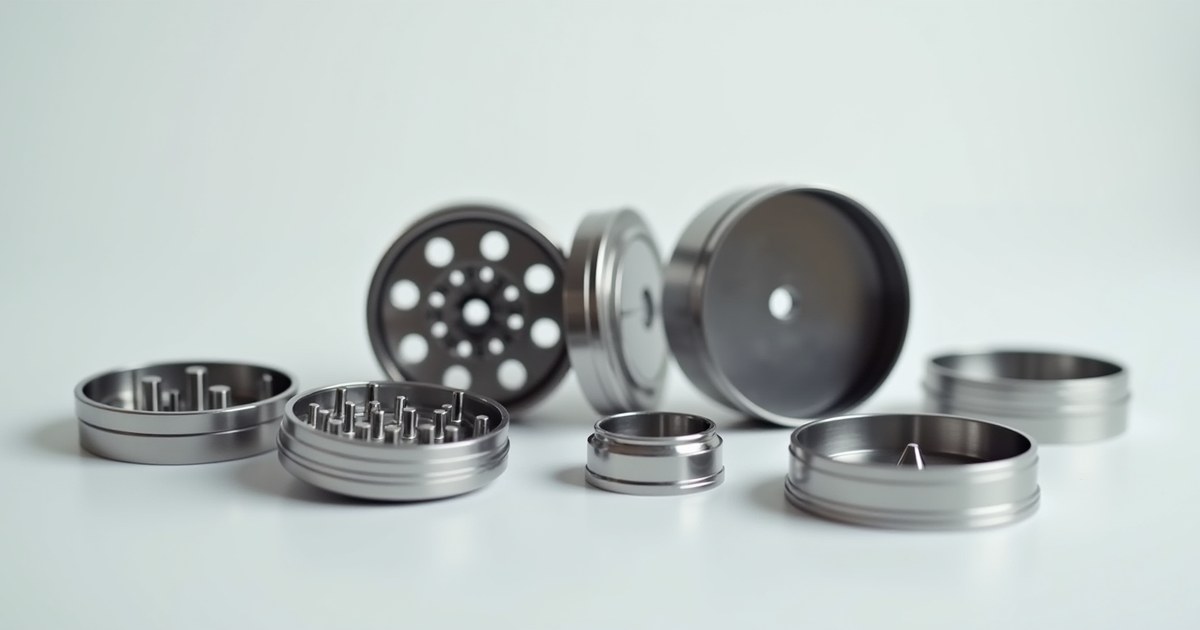
The standard for most users. The extra chamber sits beneath a fine screen and catches the finest particles. The result is cleaner ground material in the middle chamber, plus a collection of fine material below. Our 4-piece vs 2-piece comparison goes through the differences in detail.
4-Part Aluminum Grinder 50mm at The Smokery Hub →
Grinder Materials
Material affects durability, feel, and price more than anything else.
| Material | Strengths | Weaknesses |
|---|---|---|
| Aluminum | Light, durable, sharp teeth, mid price | Can dent if dropped hard |
| Zinc alloy | Heavy, premium feel, very durable | Heavier, can cost more |
| Acrylic / plastic | Cheapest, lightweight, colourful | Teeth wear and crack sooner |
| Wood-accent designs | Attractive | Wood parts are harder to clean |
For a closer comparison of the two most common choices, see acrylic vs metal grinders. In short: acrylic is fine as a cheap spare, but metal is worth the small extra spend if you’ll use it regularly.
Zilla Plastic Grinder at The Smokery Hub →
Choosing a Size
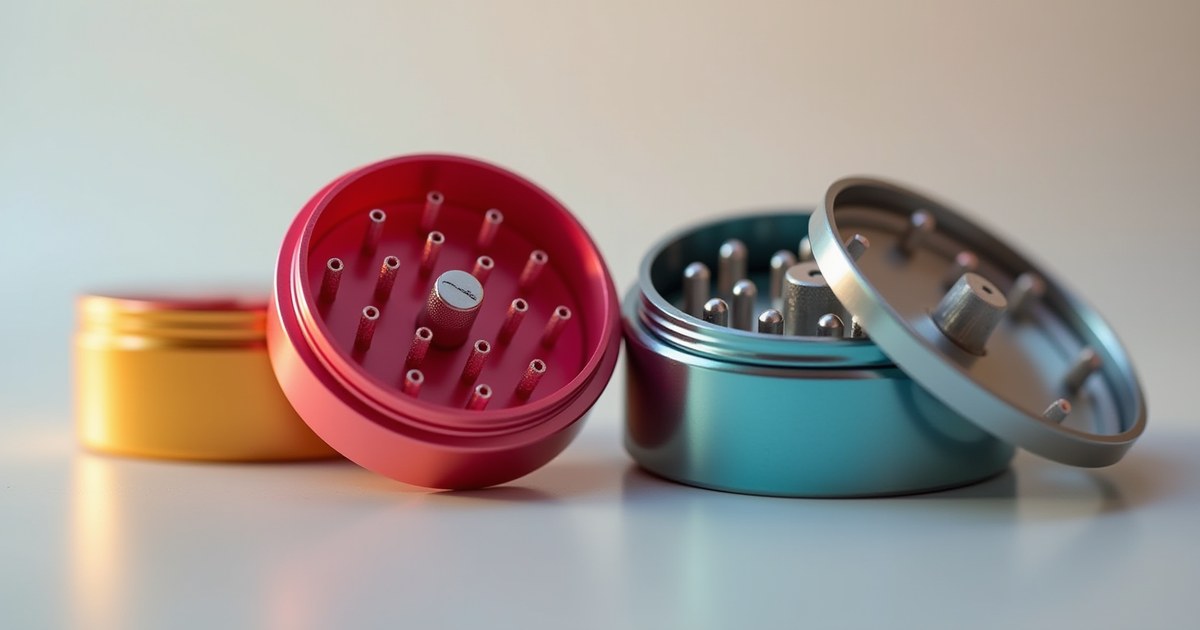
Grinders are measured by diameter, typically from about 40mm to 63mm. Smaller ones are pocketable and suit single-session grinding. Larger ones hold more and grind faster, but are heavier and harder to carry.
- 40mm: pocket-sized, best for solo, on-the-go use
- 50–55mm: the sweet spot for most people — portable but roomy
- 63mm: large capacity, best for home use or groups
Our grinder size guide explains this in more detail, including how size affects chamber capacity.
4-Part Aluminum Grinder 40mm at The Smokery Hub →
4-Part Aluminum Grinder 63mm at The Smokery Hub →
Kief Catchers and Fine Screens
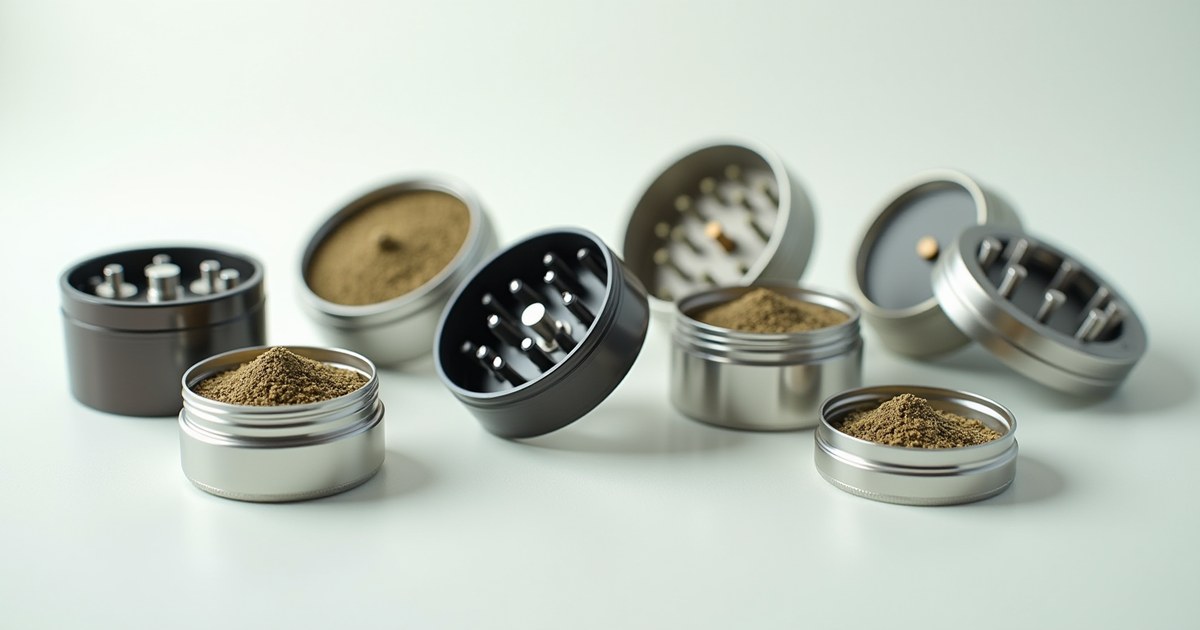
The bottom chamber of a 4-piece grinder holds the finest particles that pass through the screen. Some people collect and use them separately; others simply consider them a bonus. If you want to understand the collection side, read what kief is and how to use it, and see our roundup of the best grinders with kief catchers.
Keep in mind that the screen only works properly when it’s clean. A clogged screen defeats the purpose of buying a 4-piece design.
Electric Grinders
Battery-powered grinders do the twisting for you, which helps anyone with limited hand strength or who wants speed. They’re convenient but more expensive, need charging, and have more parts that can fail. Our guide to the best electric herb grinders covers what’s worth paying for.
Electric Herb Grinder at The Smokery Hub →
Budget Options
You don’t need to spend much. Two of our most useful budget guides are the best herb grinder under $20 and the best 4-piece grinder under $30. The rule is simple: a well-made basic metal grinder outlasts three cheap plastic ones.
Cleaning and Maintenance
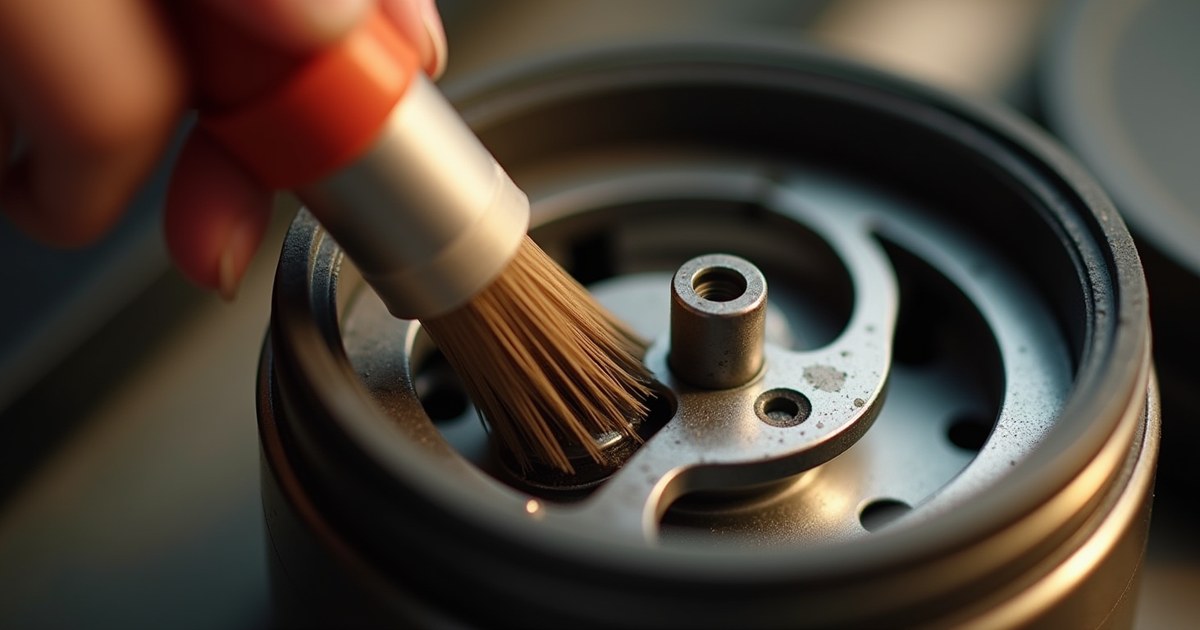
Resin builds up on the teeth and in the screen, making a grinder stiff and less effective. A basic cleaning routine keeps it working for years:
- Disassemble every part.
- Soak in isopropyl alcohol for a few minutes.
- Scrub the teeth and screen with a soft brush.
- Rinse, dry completely, and reassemble.
Our step-by-step guide to cleaning a metal grinder covers the full process. Aim to do it every two to four weeks with regular use.
Troubleshooting Common Problems
A grinder that sticks, jams, or grinds unevenly is almost always dirty or overfilled. Our grinder troubleshooting guide covers the most common causes and fixes. Quick checks:
- Stiff or hard to twist: resin buildup — clean it
- Uneven grind: overfilled chamber or worn teeth
- Nothing falling through: clogged screen
- Lid won’t close: material caught in the threads
Which Grinder Should You Buy?
| If You Want… | Choose |
|---|---|
| The best all-round grinder | 4-piece aluminum, 50–55mm |
| Lowest price | 2-piece or acrylic |
| Most portable | 40mm 4-piece aluminum |
| Ease of use | Electric grinder |
| Catch fine particles | 4-piece with fine screen |
| High capacity | 63mm 4-piece |
How a Grinder Actually Works
Every grinder uses the same basic idea: two toothed surfaces that shear material as you twist them against each other. Material is pushed toward the teeth, cut into smaller pieces, and drops through holes into a lower chamber. In a 4-piece grinder, that lower chamber is separated from the rest by a fine mesh screen, which lets only the smallest particles fall through to the bottom.
Because of this, what matters is not just the material but the design of the teeth, the fit of the threads, and how well the parts line up. A grinder with loose threads or misaligned teeth will jam and grind unevenly, no matter what it’s made of.
Features Worth Paying Attention To
- Tooth shape: sharp, angled teeth cut cleanly; blunt or shallow ones tear the material and jam more easily
- Thread quality: smooth threads make twisting easy and stop the lid from cross-threading
- Magnetic lid: keeps the top closed in a bag and prevents accidental spills
- Screen quality: a tight, well-fitted screen lets fine particles through while holding the rest
- Wall thickness: thicker walls resist denting and last longer
- Finish: anodised or coated surfaces resist scratching and stay looking new
You don’t need every feature. For most buyers, good teeth, smooth threads, and a solid body matter far more than extras.
Grinding for Different Uses
The ideal grind depends on how you’ll use the material:
| Use | Best Grind | Why |
|---|---|---|
| Rolling papers | Medium, even | Keeps airflow open and the burn even |
| Pipe or bowl | Medium to medium-coarse | Packs evenly without blocking airflow |
| Bong | Medium-coarse | Prevents material falling through the bowl |
| Cones | Medium-fine | Fills tightly and evenly |
Grinding too fine is the most common mistake. It restricts airflow, burns too fast, and can fall through screens and bowls. If your grinder produces powder, twist fewer times.
How to Use a Grinder Properly
- Fill the top chamber about halfway. Overfilling is the leading cause of jams.
- Close the lid and twist back and forth a few times, then in one direction.
- Stop as soon as the material stops resisting. Over-grinding creates powder.
- Open and tap the grinder gently so ground material falls to the lower chamber.
- Use a small tool or brush to clear the teeth before the next use.
When to Replace Your Grinder
A grinder doesn’t last forever. Replace it if the teeth are visibly worn or bent, the threads are stripped, the screen is torn, or it stays stiff even after a proper clean. For a plastic grinder, a crack anywhere is a signal to replace it. Upgrading from a worn-out plastic grinder to a proper metal one is one of the biggest quality-of-life improvements in the hobby.
Common Grinder Myths
- ‘Bigger is always better.’ Larger grinders are slower to carry and can be harder to use one-handed.
- ‘More pieces means a better grinder.’ A well-made 2-piece can outperform a badly made 4-piece.
- ‘You never need to clean it.’ Resin buildup is the main reason grinders stop working smoothly.
- ‘Expensive means better.’ Past a certain point you’re paying for branding, not performance.
Where This Guide Fits
A grinder is one part of a complete setup. Pair it with a good rolling tray and your preferred papers, and you have the core of a smoking kit. If you’re setting up a full station, see our home smoking station guide.
Related Articles
Frequently Asked Questions
What’s the best type of herb grinder?
For most people, a 4-piece aluminum grinder in the 50–55mm range: durable, portable, and it separates fine particles.
Are metal grinders better than plastic?
Yes for daily use, since metal teeth stay sharp far longer. Plastic is fine as a low-cost spare.
How often should I clean my grinder?
Every two to four weeks with regular use, or whenever it starts to feel stiff.
Why does my grinder feel sticky?
Resin buildup on the teeth and threads. A soak in isopropyl alcohol and a scrub will restore it.
Is a bigger grinder better?
Not necessarily. Larger grinders hold more, but smaller ones are far easier to carry and use one-handed.
Final Thoughts
The right grinder is the one you’ll use daily without thinking about it. For most people that means a 4-piece aluminum model around 50mm, kept clean every few weeks. Start there, and adjust size or material once you know your habits.
Shop Grinders at The Smokery Hub
Aluminum, zinc alloy, and acrylic grinders in every size.
Prices listed are approximate and may vary by retailer. Always check current pricing before purchasing.
complete guide to herb grinders, herb grinder buying guide, herb grinder guide, how to choose a herb grinder, types of herb grinders