
- Your cart is empty
- Continue Shopping
Do You Need Calibration Weights for a Digital Scale?
- Posted on
-
Posted by: Blaze Jax
- 0 comments
- Categories: Weighing Scales
Affiliate Disclosure: This post contains affiliate links. If you buy through our links we may earn a small commission at no extra cost to you.
Quick Answer
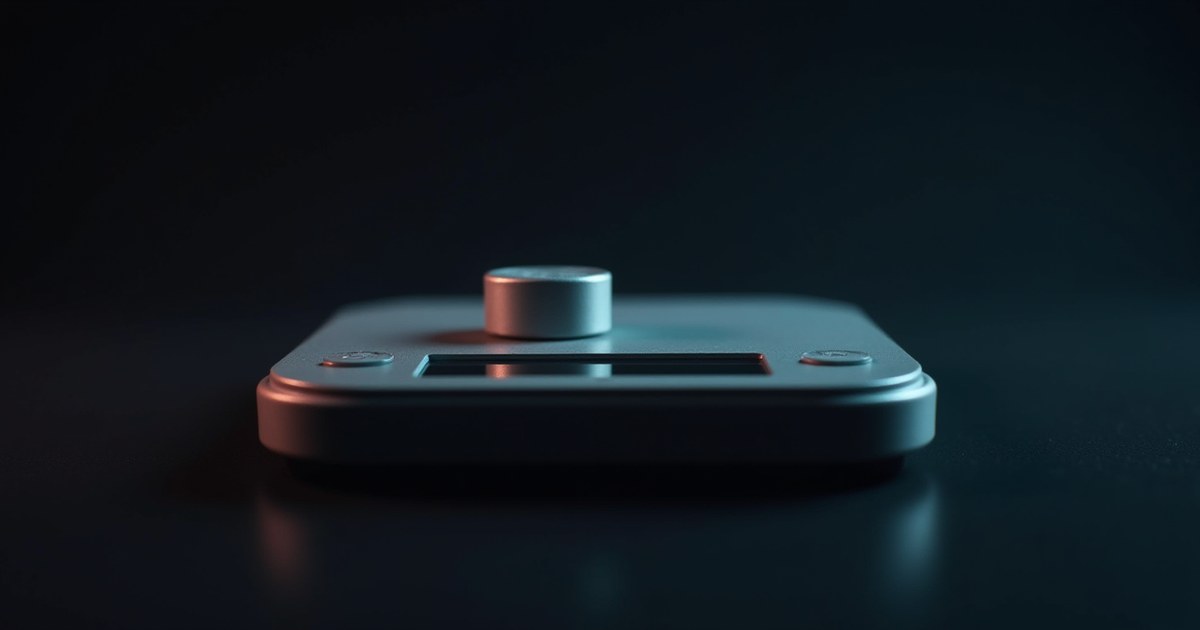
If your scale supports manual calibration mode, you need a specific-weight calibration piece for it to work correctly — using a random object of approximately the right weight won’t calibrate it accurately. If your scale doesn’t have a calibration mode, it relies on factory calibration and can’t be manually adjusted either way.
Calibration weights are one of those accessories people skip until their scale starts reading inconsistently. Whether you actually need one depends on what kind of scale you own.
Scales With a Calibration Mode
Most mid-range and higher digital scales include a calibration function, often triggered by holding a button on power-up, that asks you to place an exact known weight on the plate. Without the correct weight for your scale’s required calibration value, this function can’t work — an approximate substitute will actually make readings worse, not better.
Scales Without a Calibration Mode
Cheaper, simpler scales are factory-calibrated and don’t offer a way to manually adjust them. For these, a calibration weight is only useful for checking accuracy against a known reference, not for fixing drift — if it’s off, the scale generally needs replacing.
Common Substitutes and Why They’re Risky
Coins are the most common improvised calibration weight, but exact weights vary by country, mint year, and wear — even a 1-2% error compounds into meaningfully wrong readings for precise work. If accuracy matters, a proper calibration weight matched to your scale’s requirement is worth the small cost.
How to Check If Your Scale Needs Recalibrating
Weigh the same known object weekly and watch for drift over time. Small, consistent overweighing or underweighing across multiple items is the clearest sign it’s time to recalibrate rather than just a one-off reading error.
Calibration Weight Necessity
| Scale Type | Calibration Mode? | Weight Needed? |
|---|---|---|
| Basic pocket scale | Usually no | Only to verify, not fix |
| Mid-range digital scale | Often yes | Yes, exact match required |
| Precision lab-style scale | Yes | Yes, essential |
Related Articles
Frequently Asked Questions
Can I use a coin as a calibration weight?
Only as a rough check, not a true fix — coin weights vary enough between currencies and wear to introduce real error.
How much does a proper calibration weight cost?
They’re inexpensive, generally a small fraction of the cost of the scale itself.
Does every digital scale support calibration?
No — many budget scales are sealed at the factory setting with no calibration mode available to the user.
What happens if I calibrate with the wrong weight value?
The scale will apply a false correction, making every future reading consistently wrong until recalibrated correctly.
Final Thoughts
If your scale has a calibration mode, get the matching weight — it’s cheap insurance against silently wrong readings. If it doesn’t have that mode, a calibration weight is still useful for spot-checking accuracy, just not for fixing it.
Prices listed are approximate and may vary by retailer. Always check current pricing before purchasing.
digital scale calibration weight alternatives, do you need calibration weights for a digital scale, how to calibrate scale without weights, scale accuracy without calibration weight